About
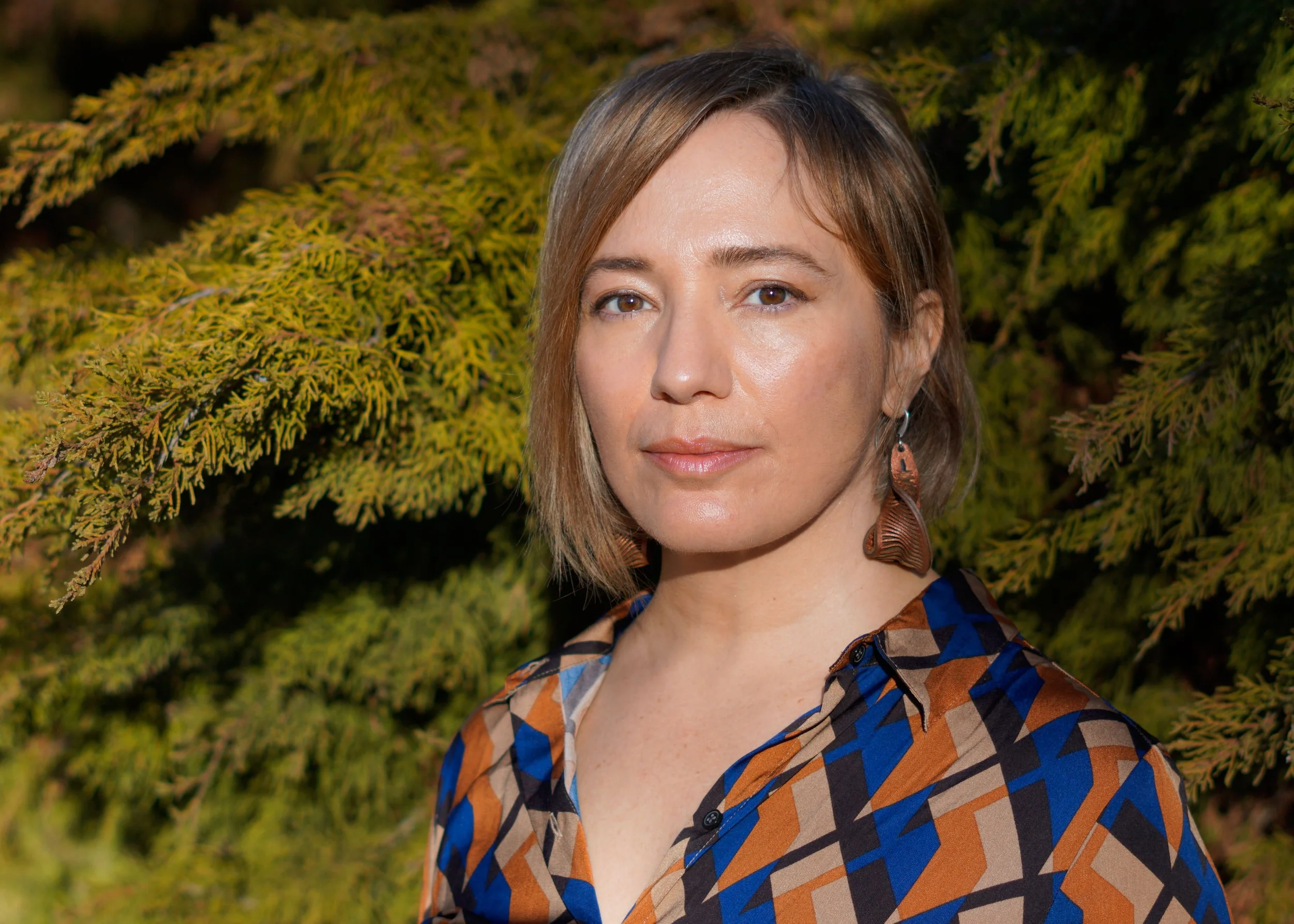
Bio:
Asha Canalos is an artist, writer, climate justice advocate, and herbalist based in Albuquerque, NM. Her work addresses social and environmental justice; relationships between plants, people, and the land; and themes of resilience and resistance. Canalos’s creative work develops through intensive research, field work, and collaborative exchanges. This has often included working with frontline grassroots and indigenous communities resisting harmful fossil fuel development. As a trauma survivor, living with PTSD and fibromyalgia, her projects also examine the neurobiological landscape of trauma and recovery, and identify strategies for individual and collective healing.
Canalos is of Greek, Italian, German, British, and Lenape descent. She received her BA in Visual Arts at Antioch College, and earned a dual degree MFA in Painting, and MS in Theory, History, and Criticism of Art at The Pratt Institute. Her artwork has been shown at art venues nationally, including The Bronx Museum, Miami PULSE, Pace University, and The Santa Fe Art Institute. She’s been featured in The New York Times Magazine, Hyperallergic, Art Daily, and The Santa Fe Reporter. Canalos has been the recipient of numerous awards, including the Dyson Artist’s Residency at Pace University, and the Juror’s Award at GEISAI Miami / PULSE Contemporary Art Fair. She has participated in the AIM Fellowship program at the Bronx Museum, and The Santa Fe Art Institute ‘Water Rights’ Residency.
In 2011, in upstate New York, Canalos became a community representative in a federal anti-fracking case that lasted several years. In 2012, she was arrested for non-violent direct action in protest of pipeline infrastructure construction occurring before the community’s case was heard at the D.C. district circuit level. The case was lost in 2014, with the most vocal judge on the order being Brett Kavanaugh; while the case was lost, the community efforts were as seen as pivotal in the state’s banning of fracking extraction later in the year.
Canalos moved to Albuquerque in 2015, where she became involved in anti-fracking work with The Greater Chaco Coalition as a social-practice artist and event organizer. In 2019, she facilitated an art zine project with faculty and students of The Land Arts of The American West (LAAW) program at The University of New Mexico (UNM), in collaboration with Diné and Pueblo community leaders. One of the project zines was included in an exhibit at The New Mexico Museum of Art, and then later removed, triggering an investigation by The National Coalition Against Censorship in 2020.
Canalos served as Visiting Artist with both LAAW and Radicle Art & Ecology Lab (RAVEL) programs at UNM, and has taught in the Art & Ecology program, also at UNM. She has additionally been an instructor and author of articles for Albuquerque Herbalism, and contributed visual art and writing to various cultural and environmental publications. Increasingly, her work draws on her herbalism studies, farming experiences, and research into neurobiology to help support themes of resilience, care of self and community, and greater interconnection with the land and one another.
Artist Statement:
My work explores healing in the face of ecological harm and personal trauma. It investigates the charged, mysterious areas between themes of body and land: the connections between harmed land and people, and conversely, the resilience of the body, and the living landscape all around us, despite oppressive forces and damage to living systems. Drawing on research in fields including neurobiology, plant biology, ecology, and environmental policy, my projects focus on the interdependent welfare of landscapes, communities, minds and bodies as felt and lived realities.
In these narratives, trauma itself is explored not only as an emotional/bodily/ecological phenomenon, but also as a lightning rod for change; the moment or embodiment of a catalyst initiating the alchemy of transformation in the world. Here, the line between 'victim' and ‘warrior' is often blurred. My goal with this work is to connect often fragmented wholenesses: the victim and warrior, the personal and the universal, the individual and the community, the body and the land.
For me, writing and visual art often go hand-in-hand; one complements and expands the communicative capacity of the other. My life experiences and collaborative exchanges directly inform my writing and art- each piece an attempt to refine and transmute the content and meaning of these experiences into something that is authentic, and hopefully, made beautiful through the process of creative integration.